A 40-yard roll-off container provides 40 cubic yards of storage capacity, which equals roughly 16 standard pickup truck beds of bulk debris. In structural projects across Buckhead, Midtown, and Old Fourth Ward, this…
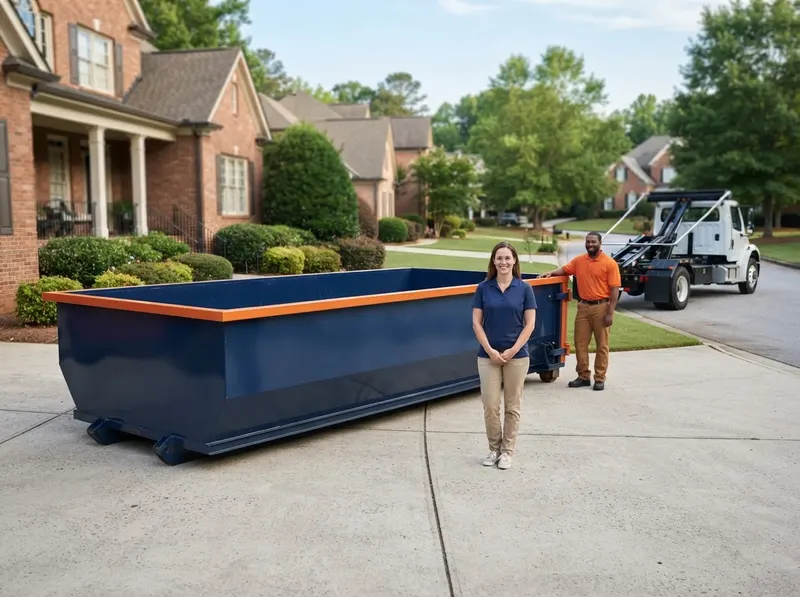
A 40-yard roll-off container provides 40 cubic yards of storage capacity, which equals roughly 16 standard pickup truck beds of bulk debris. In structural projects across Buckhead, Midtown, and Old Fourth Ward, this container accommodates interior gut-outs, framing tear-offs, and full estate cleanouts. The 8-foot sidewall height requires loading large framing materials through the swinging rear cargo door rather than tossing items over the exterior lip. Driveway protection boards sit underneath the steel wheels prior to roll-off contact, ensuring paver surfaces, stamped concrete, and aged asphalt drives avoid pressure cracking or track scraping. The container requires a straight approach clearance of 60 feet and vertical clearance of 22 feet free of utility lines or mature hardwood branches, making site inspections necessary along narrow rights-of-way like those common to Inman Park, Cabbagetown, and Kirkwood.
Selecting a 40-yard dumpster fits whole-home estate liquidations, multi-room drywall demolitions, and commercial build-outs where lower volume units would require multiple mid-project hauls. When managing light, bulky debris like interior framing, carpet, retail fixtures, and insulation, the container maximizes volume capacity up to the 4-ton allowance. Conversely, dense masonry like poured foundation slabs, brick, uncrushed soil, and dense wet gravel must not be loaded into a 40-yard unit; heavy aggregate exceeds highway gross vehicle weight limits enforced by the Federal Motor Carrier Safety Administration and causes systemic overage charges. Dense fill projects instead mandate a 10-yard or 20-yard low-profile container to stay within safe axle limits.
Disposal routing adheres directly to local environmental mandates. Waste collected across Fulton County moves through approved municipal handling systems operating under Georgia Environmental Protection Division guidelines. Mixed solid waste routes to certified regional facilities such as the Pine Grove Landfill, while clean dimensional timber and scrap metal can be segregated for diversion per US EPA construction debris recovery guidelines. Hazardous materials, including wet paints, automotive oils, loose chemicals, lithium batteries, and intact cooling units carrying Freon, are barred from loading pursuant to OSHA safety standards and municipal disposal rules. For street placement inside the City of Atlanta public right-of-way, local regulations monitored by the Atlanta Department of Transportation require a designated street-use permit if the unit occupies public roadway stalls or curb lanes.
To ensure straightforward logistics, the delivery sequence follows three clear steps:
1. Verify that your delivery zone provides a 10-foot wide flat staging strip with 22 feet of overhead clearance, clear of trees and low hanging power lines.
2. Lay down protective surface runners or verify placement coordinates with the driver before the hydraulic hoist arm sets the steel container down.
3. Distribute materials level with the 8-foot top rail, latching the rear door tight before requesting hauler pullout to prevent tarp snagging or road debris loss under US Department of Transportation transit regulations.
Every job gets a firm, written price after a free on-site visit.
For standards, safe disposal, and service guidance on DUMPSTER in Atlanta, GA, useful references include U.S. EPA, EPA, EPA, OSHA, Earth911, and Google Maps. General consumer and small-business resources are available from USA.gov, Better Business Bureau, FTC Consumer Advice, U.S. Small Business Administration, and Ready.gov.
Tell us about your 40-yard dumpster rental job in Atlanta and we'll send a clear, written quote, usually the same day.
 SolidWay Haul Services